How the AI research paper writer works
The paper starts from sources, not from a blank page. scid.ai finds publications for your question, you check the set, and only then the text is assembled section by section with a reference next to every claim.
- State the topic and the question. Describe what you study and what you want to show. The sharper the question, the sharper the literature selection.
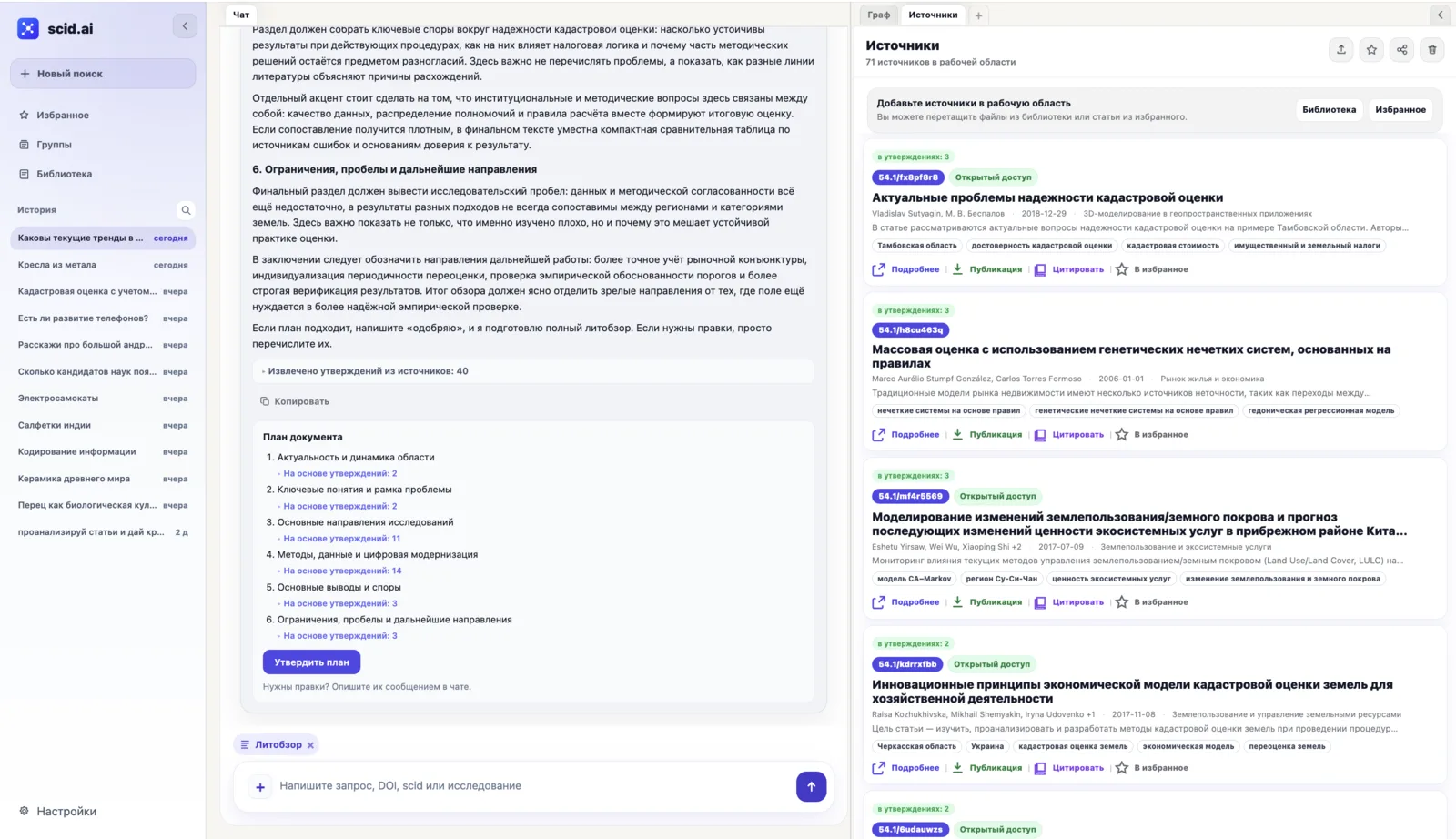
- Check the sources. Remove irrelevant papers, add your own files and data from the library: they become part of the evidence base.
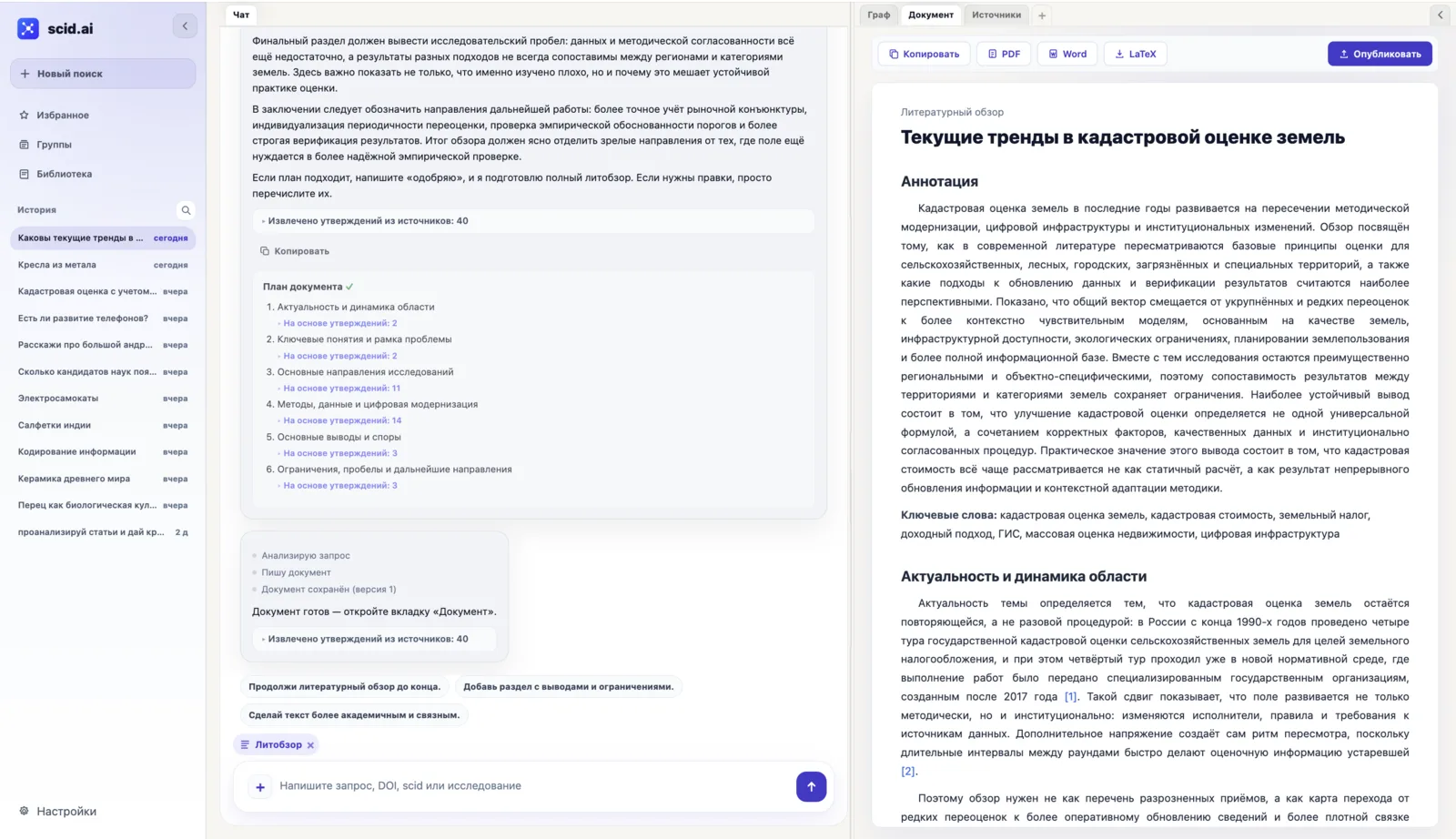
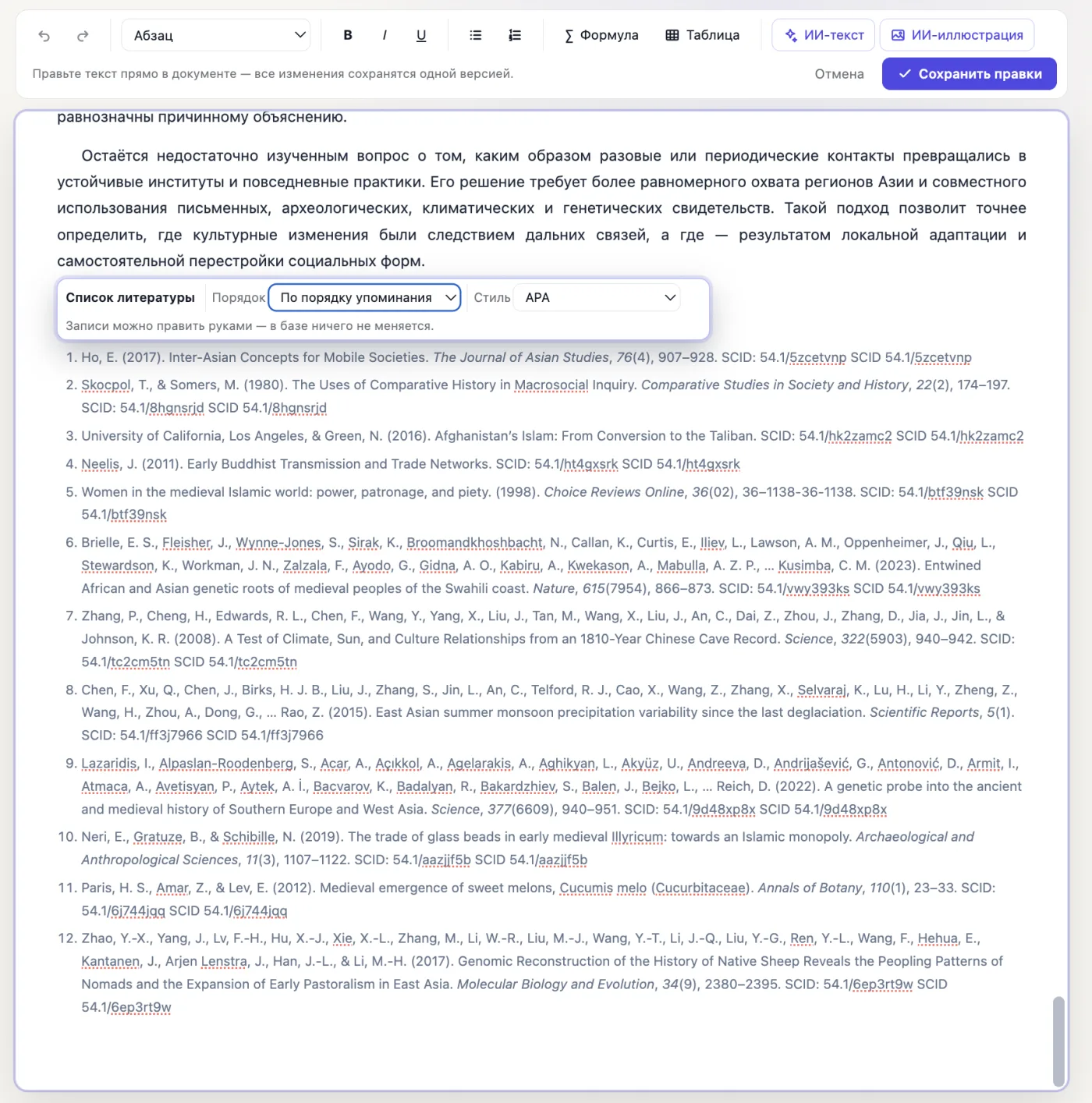
- Get the draft. Introduction, literature review, methods, results, discussion and conclusions. The reference list is formatted in APA or GOST.
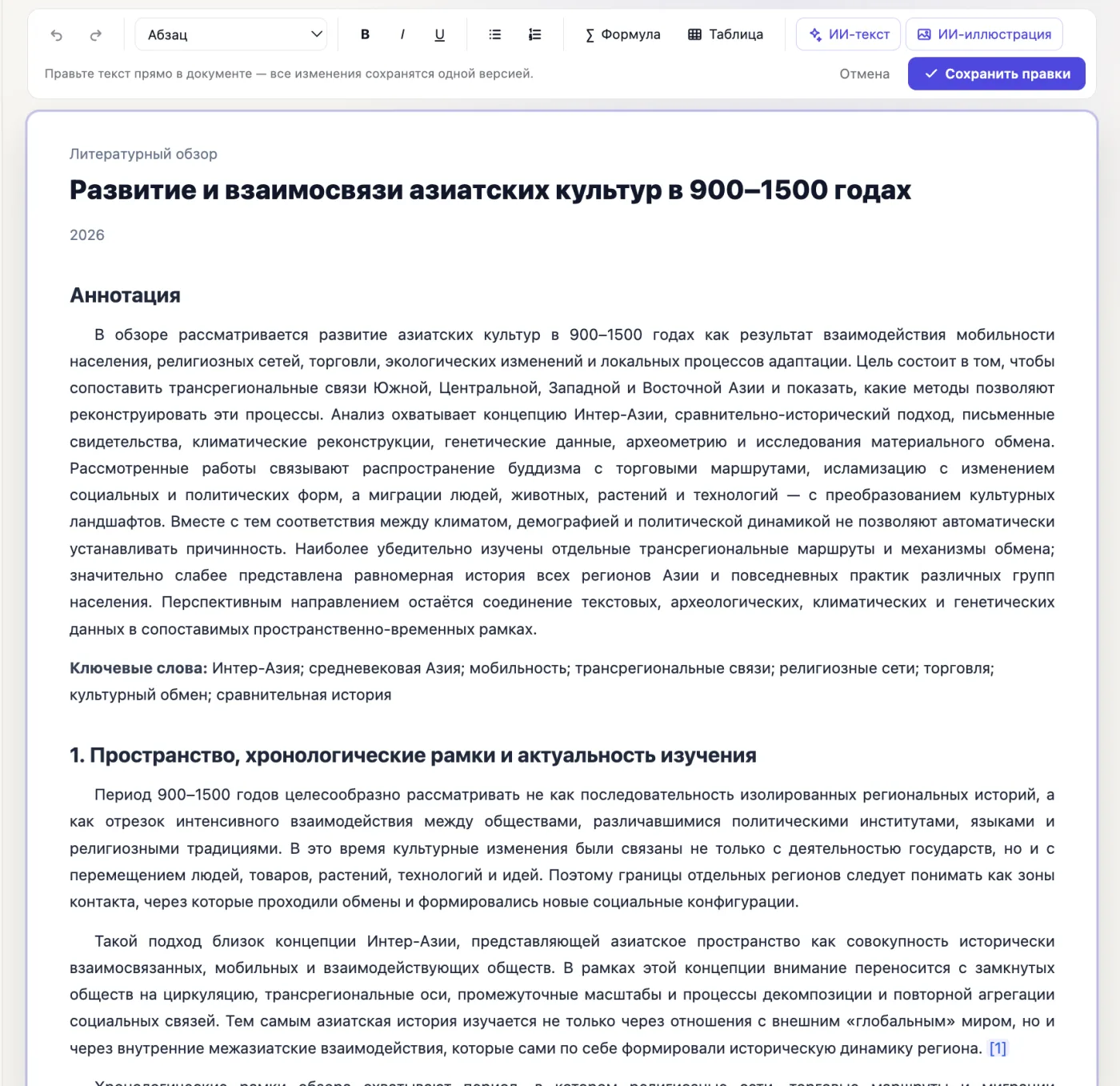
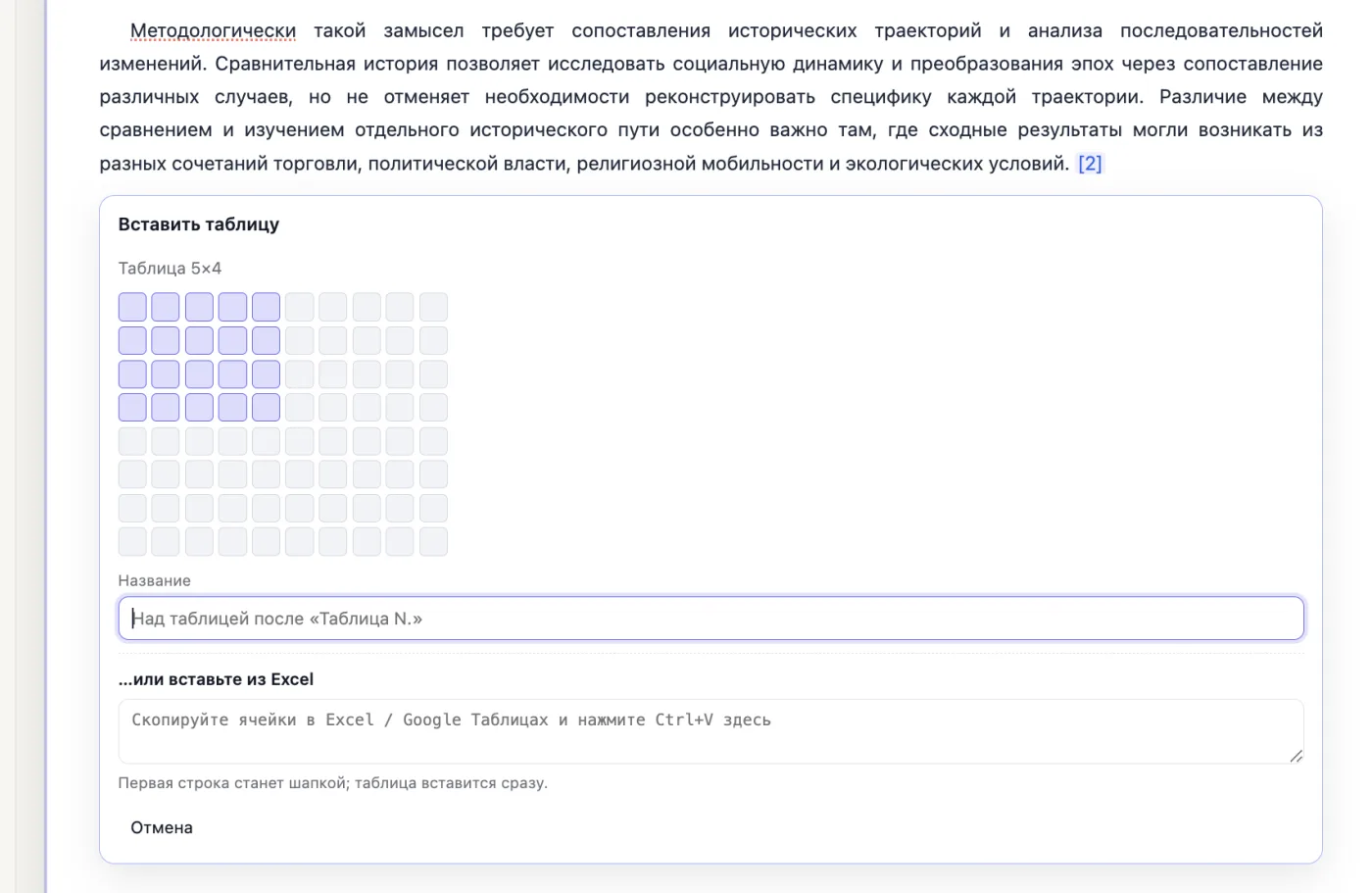
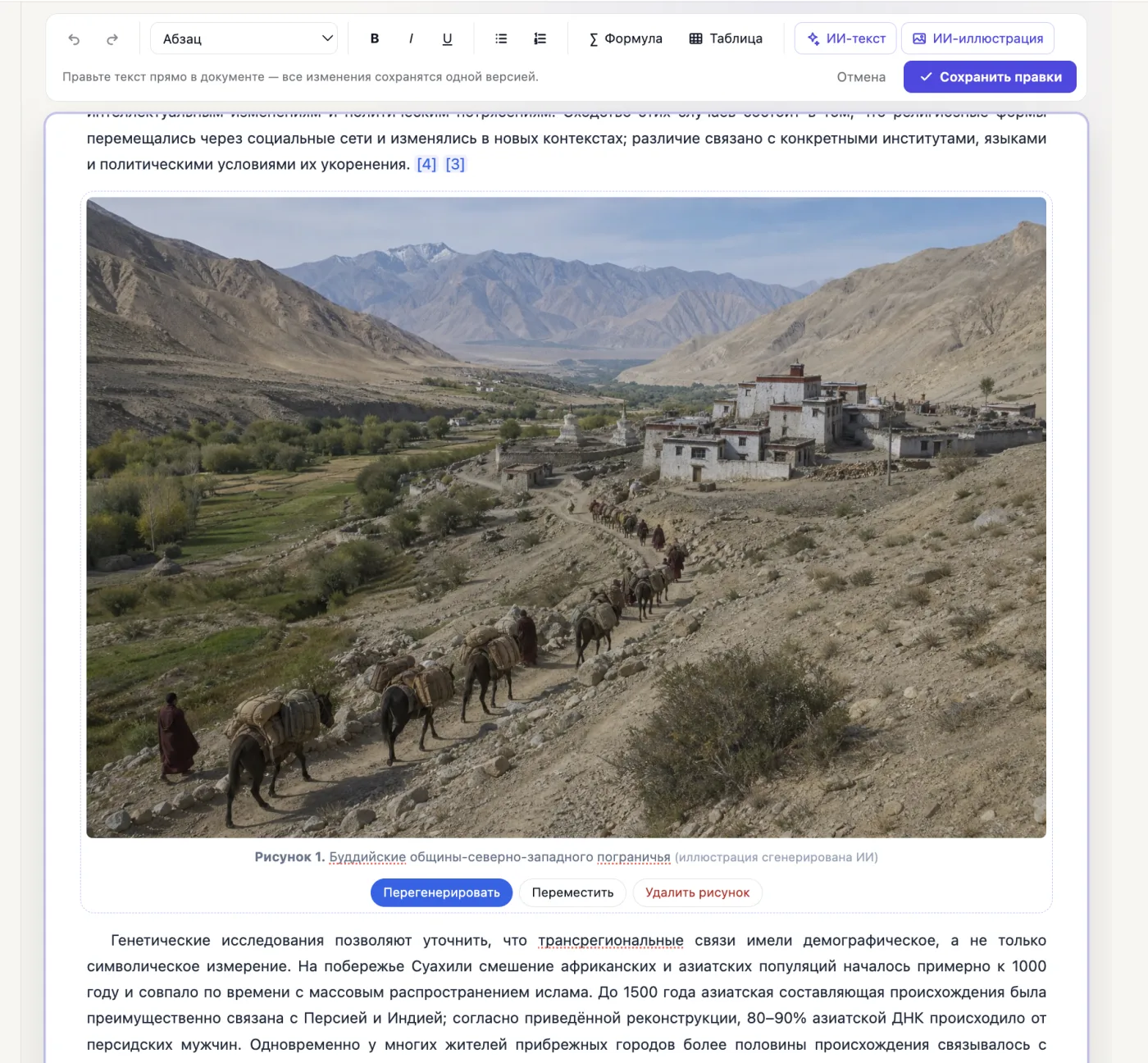
- Edit in the editor. Headings, lists, formulas and tables, AI editing of a selected passage and illustrations from a description. Every save is a new version.
Academic paraphrasing tool: AI editing in the editor
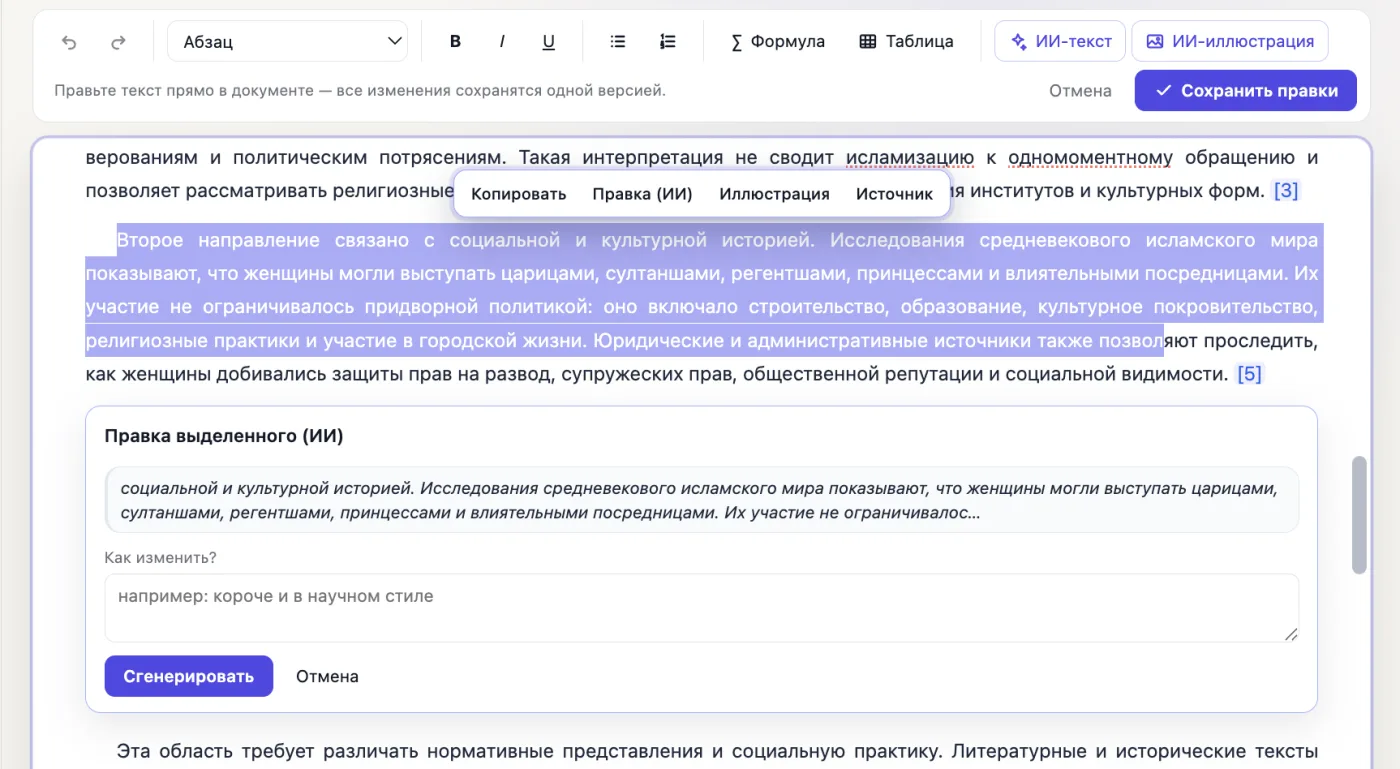
Select a passage in the document and press “AI edit” in the pop-up menu. In the “How should it be changed?” field write what you need: “paraphrase in academic style”, “shorter and more formal”, “expand with an example”, “remove repetition”. The AI rewrites only the selection, source references and numbers stay in place, and the previous wording is kept in version history.
To paraphrase text in academic style outside a document, paste it into the chat with the ready prompt “Paraphrase in academic style”: the answer can be turned into a document and exported.
What the AI will not do for the author
- It will not invent experimental results or data: the Methods and Results sections rely on your materials and published work.
- It does not replace verification: every claim in the draft must be checked against its source, and the references sit right next to the text for that.
- It is not responsible for publication: journals require disclosure of AI use, and the authors remain responsible for the text.
- It does not guarantee originality of wording: check the text against your university's or publisher's requirements.
What kind of work it suits
- A journal or conference paper: a draft of the sections and the reference list that you refine to the editorial requirements.
- A thesis or dissertation: a sourced review chapter and academic-style editing of your own sections.
- A grant or project report: a results-driven structure, references to publications, Word export.
- A preprint or working paper: fast publishing of a version on scid.ai with a permanent link.
 scid.ai